
Free Resilience Training for First Responders · March 5 to 7, 2027
Mission: Reset
Your nervous system is the most important piece of equipment you carry. This free three-day training teaches you to run it on purpose: stay sharp under pressure, come down fast after the shift, and protect your health for a long career and a long life after it. For Midwest first responders, with meals and lodging included. Hosted by the Center for Suicide Awareness and taught by Barb Bigalke, Jesse Coomer and James Stewart.
Why It Matters
The job runs your stress response hot. Most responders were never taught how to turn it back down.
A body built for emergencies is great on a call. The trouble starts when it stays switched on: after the call, after the shift, at 2 AM when you should be asleep. Over a career, that wear shows up in your sleep, your heart, your mood, your relationships and your judgment. It doesn't have to. Your stress response is trainable, and the main control you have over it is your breathing.
What You'll Walk Away With
Perform better. Recover faster. Last longer.
Perform on the Job
- Know what stress does to you.What happens to your heart rate, vision, hearing, fine motor skills and decision-making when the pressure spikes.
- Control it on demand.Tactical breathing that brings your heart rate down and steadies your hands, voice and thinking. Drilled until it is automatic.
- Stay clear under pressure.Controlled stress exposure in the sauna and cold water, where you practice staying calm while every alarm in your body says get out.
Recover After the Shift
- Come down fast.A simple protocol to shift out of call mode after a hard call or a long shift, instead of carrying it for hours.
- Settle your system at night.Breathing techniques to quiet your body before sleep, so you start the next shift recovered, not running on fumes.
- Leave the job at the door.Show up at home as yourself, not as the version of you that just cleared a scene.
Last for the Long Haul
- Catch overload early.Read the early warning signs in your own body before stress starts making your decisions for you.
- Build a daily habit.A short routine you design during the weekend, so the training keeps paying off after you go home.
- Invest in your health.A stress response you can turn down gives your sleep, your energy and your heart a break from running in emergency mode, over a career that asks a lot of all three.
This is training, not therapy.
Nobody will ask you to talk about your worst call or analyze how you feel. You'll learn how the system works, practice the skills and test them under controlled stress, the same way you train with every other tool you rely on. Think of it as range time for your nervous system.
The Details
All you have to do is get there.
- DatesFriday, March 5 to Sunday, March 7, 2027
- ArriveFriday by 5:00 PM Central
- DepartSunday at 2:00 PM Central
- LocationA retreat house in Clintonville, Wisconsin. The address is in your confirmation email.
- CostFree. All meals and lodging are included.
Mission: Reset is hosted by the Center for Suicide Awareness, a 501(c)(3) nonprofit based in Kaukauna, Wisconsin, so there is no cost to attend. You don't need a department sponsor or a grant to come.
Bring yourself and we'll take care of the rest: your bed, your meals and the whole program. Confirmed participants get the full schedule and a packing list before the weekend.
Hosted By
The Center for Suicide Awareness

Mission: Reset is hosted by the Center for Suicide Awareness (CSA), a 501(c)(3) nonprofit based in Kaukauna, Wisconsin. CSA began in 2010 as a grassroots effort to bring help, hope and resources to families and individuals, and it exists to break stigma and strengthen human connection.
CSA trains police, fire, EMS and dispatch in suicide prevention and intervention, and runs HOPELINE, a free and confidential text line with trained counselors available 24/7. Donations to CSA help cover the lodging, meals and programming for first responders at Mission: Reset.
Who It's For
Built for people whose job is to run toward what everyone else runs from.
- Law enforcement and corrections
- Fire and rescue (career and volunteer)
- EMS and paramedics
- 911 dispatch and telecommunicators
- Active-duty military and veterans
Open to current and retired first responders who live or serve in the Midwest.
The weekend holds twelve people. If you're the only person from your agency, that's fine. The point is that everyone here understands the job.
Your Facilitators
Barb Bigalke, Jesse Coomer and James Stewart
Three facilitators, one weekend. Barb brings years of crisis response and suicide prevention work with first responders, and Jesse and James bring the breathwork and nervous-system training.

Barb Bigalke
Founder and Executive Director, Center for Suicide Awareness
Barb founded the Center for Suicide Awareness and launched Wisconsin’s first text-based support line, HOPELINE. She is a graduate of the FBI Academy’s Master Resilience Trainer program, serves on a Critical Incident Stress Management (CISM) team, has completed Crisis Intervention Team (CIT) training, and is a certified QPR instructor trained in crisis response, suicide prevention, intervention and postvention.
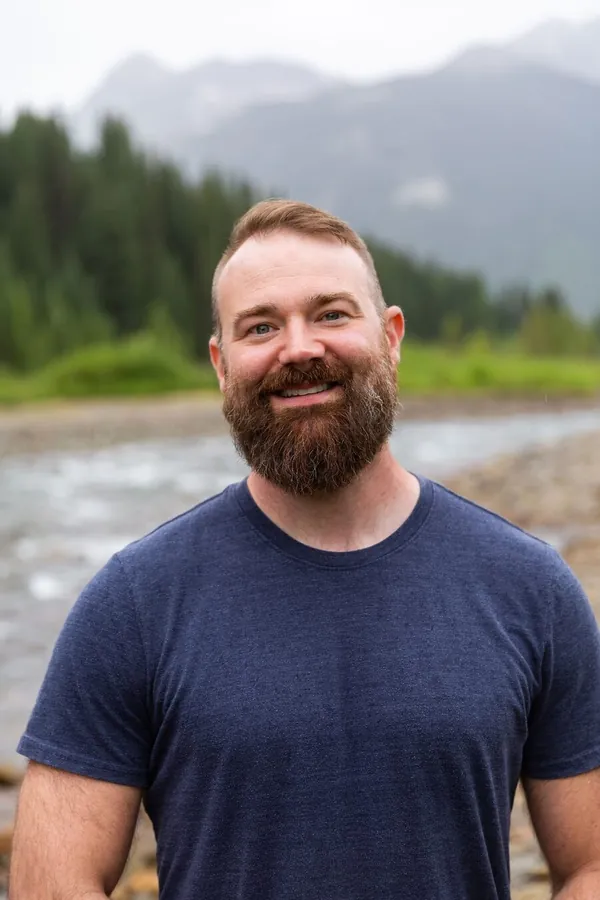
Jesse Coomer
Founder, Breathwork//Tactics
Jesse built Breathwork//Tactics, nervous-system training that is part of the Indianapolis Police Academy curriculum. He has written five books on breath and resilience, founded The Language of Breath, a certification school for breathwork professionals, and hosts The Breathwork Channel on YouTube.

James Stewart
Breathwork Instructor and Veteran Wellness Advocate
James co-hosts The Breathwork Channel and works with U.S. veterans at the VA, teaching nervous system regulation alongside medical volunteers. He has trained hundreds of people in breathwork since 2018 and is known for a calm, grounded presence that puts first-timers at ease.
What the Weekend Includes
Hands-on, practical and built for the job.
No conference schedule, no keynote, no lecture you'll forget by Tuesday. Almost everything is something you do. The final schedule is still being set, and every Mission: Reset weekend is built around these pieces.
Stress Physiology, Made Practical
How your nervous system shifts gears under threat, what that does to your performance, and how your breathing shifts it back.
Tactical Breathing Drills
Short techniques for the car, the scene and the minutes after a call, practiced until they are second nature.
Extended Breathwork Sessions
Longer guided sessions that show you how much control you really have over your own state, and how to use it on purpose.
Sauna and Cold Water
Controlled stress exposure. You train staying calm and clear-headed when your body wants out. Always at your own pace, never forced.
Recovery Is Part of the Training
Downtime between sessions, on purpose. Like any athlete, you get stronger in the work and adapt in the rest.
Your Plan for Monday
A daily routine you built yourself, plus a way to stay in touch with the group and the facilitators.
Join the Waitlist
Sign-ups are paused. Join the waitlist.
We're taking names for the waitlist now. We plan to hold more Mission: Reset weekends in the spring and summer of 2027, and we're finalizing those dates now. Join the list and we'll let you know if anyone cancels for March, and as soon as the new dates are out. If you already signed up, your request is in.
Questions
Before you sign up.
If you're struggling right now, you don't have to wait for March. Text HOPELINE to 741741 to reach CSA's free, confidential text line, or call or text 988 for the Suicide and Crisis Lifeline. Both are there 24/7.